Voices from the States
In honor of the 21st anniversary of the Family and Medical Leave Act, we’ve asked activists around the country to reflect on what FMLA means in their states, how states are taking action to improve upon this seminal law and where we still need to do work.
Ellen Bravo
 Why are opponents so concerned about local communities deciding what’s best for the health and welfare of their residents? Because these naysayers, fueled by lobbyists and financing from mega corporations, know such reforms lead to change statewide and nationally. Local wins provide living proof that minimum standards like paid sick days and paid family leave benefit families, businesses, public health and the economy. And growing victories tear to shreds the opponents’ predictions of doom. Family Values @ Work is proud to present this blog carnival of Voices from the States in honor of the 21st anniversary of the Family and Medical Leave Act. In all parts of our nation, activists are building broad and diverse coalitions, raising awareness of the need for and the enormous benefits from new workplace protections. In these blogs, you’ll hear about workers and business partners and other allies who have gotten involved. You’ll see the various kinds of change our member coalitions are working for – and winning. You’ll hear from strong labor partners. Read more
Across the country LGBTQ families face unique challenges navigating the web of laws that don’t serve their families well.
Wendy Chun-Hoon
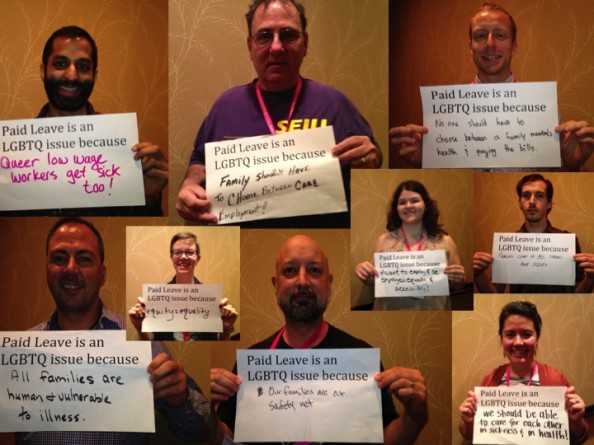 Imagine being pregnant with twins and your lawful and loving spouse has to sue you to establish joint custody under the law. This is happening now to a woman who married her wife in Massachusetts. The couple moved their family to North Carolina and are now expecting twins. Under North Carolina law, their marriage didn’t exist. Not only would her wife have to sue her, she also couldn’t use family leave to care for her spouse as she recovered from the birth. In far too many households, LGBTQ partners aren’t able to care for each other without risking wages or, worse, their jobs because under the FMLA’s restrictive definition of the word “spouse,” their relationship doesn’t count. Read More
The AFL-CIO notes that as important as activism is, political leadership is necessary for change as well.
Liz Shuler
Two factors are on our side right now. One is momentum. The President’s focus on these issues in his State of the Union speech reflects the call from millions of us at every level—from states and localities passing paid family leave and paid sick leave laws and raising the minimum wage to fast food and Walmart workers demanding decent pay. The second: this is an election year.
Countless people made the agonizing choice today between losing their paycheck and taking care of a family member who needs them. The American Federation of Teachers thinks we can do better.
Randi Weingarten
 Paid family leave is not only important for families; it’s important for our economy. The Center for American Progress found that providing paid leave benefits increases workforce participation; increases employee retention; and increases lifetime earnings and retirement security among workers, especially women.
Read more
Low wage workers across the country are standing up for fair wages and paid sick days, SEIU tells us.
Mary Kay Henry
 The $200 billion dollar fast-food industry made of giants such as McDonalds, Wendy’s, Taco Bell, KFC and Pizza Hut continues to make money hand over fist—and they’ve made the mistake of thinking they can ignore the workers who make their profit possible. Fast-food workers are standing up today to show they’re not just “cheap labor”—they’re men and women who want nothing more than to be treated with dignity and be permitted to earn an honest living. “I’m not trying to be a millionaire working at Taco Bell, but I do want the basics,” said Chad Tall, a Taco Bell worker from the Bronx, N.Y. “I don’t want to have to sacrifice breakfast to buy a Metro Card.” From sick days to livable wages, it’s clear—when working people stand together, we can win better lives for ourselves and everyone in our communities. Read more
A special wish for those who are caring for children and parents from National Hispanic Council on Aging
Dr. Yanira Cruz
 Today, the Family and Medical Leave Act (FMLA) turns 21 years old, and as a daughter, mother, caregiver, and worker I couldn’t be more thrilled. In honor of that birthday, I wish for swift, bipartisan action on the Healthy Families Act and the FAMILY Act this year because being a good worker should not come at the expense of caring for one’s family and health. Read more.
Multi-generational families win as California once again leads the way for families.
Jenya Cassidy
 As long as I can remember, my grandmother was there for me. She offered bribes to get me to give up my baby blanket, attended every school play, celebrated with me when I graduated from college, and even flew across the state at age 75 to help me after my first child was born. When she ended up in the hospital after a bad fall at 91, I wanted to be there for her too. Read More
In Connecticut, personal experience reflects the changing reality for families across the country.
Michelle Noehren
 Winning FMLA was a huge victory – it provided millions of workers with job protection so they could take extended time off from work if needed. But it’s not enough. Not anymore. Especially in the hard economic times our country has faced over the past several years, workers cannot afford to take unpaid time off from work so we’re going to work while living with serious illnesses, we’re going back to work after giving birth before we really want to and we’re driving ourselves crazy trying to figure out how to take care of our elderly family members while getting in our 40 hours. Read more
Activists in Colorado work towards the next step to handle the dual responsibilities of work and family.
Linda Meric
 Coming of age means it’s time to make leave more accessible and affordable. Last year Colorado passed the Family Care Act. The new law permits workers who are eligible for FMLA to take time to provide care for a domestic partner or partner in a civil union. Now, working women and families nationwide need access to paid family and medical leave insurance – a reflection of the realities faced by today’s workers, families and the economy. Workers like Shelby need not just leave, but paid leave. The Colorado mother who works as a hotel security guard was able to take time off when her daughter needed surgery the same time a parent needed medical attention. But the time was unpaid. “After not paying rent and utilities, it took me four months to only partly get caught up with bills.” Read more
Servers in our Nation’s Capital look at what changes we need to see in FMLA to cover some of the most vulnerable workers in Washington, DC
Jeremiah Lowery and Anna Hovland
 In Washington, D.C. over 50 percent of restaurant workers in Wards 7 & 8 (the areas of D.C. where the majority of the District’s African American population reside) live below the poverty line. These are the very workers least likely to be covered by the FMLA. Therefore, workers and advocates much come together once again and address this issue. How do we do it? What changes to FMLA should we be looking at? Read more
Progress in Georgia is a good example of how to achieve progress in a solidly red state.
Cindia Cameron
 A sign of how far we have come as a nation and a movement is that the Family Care Act is moving forward in a state like Georgia. In our state, the only path to public policy reform lies in drafting legislation that can be championed by the majority party. That requires building a coalition of organizations that have strong relationships with Republican legislators and statewide membership. The Georgia Job Family Collaborative has done both. Read more
To address the gaps in FMLA a grassroots coalition of over 100 Maryland advocacy groups, businesses, and faith-based organizations, is working to advance paid sick days in their state
Andrea Vaughn
 Along with the gaps in FMLA, a staggering 700,000 private sector workers in Maryland – and about 80 percent of low-wage workers – do not earn sick time that they can use when they or a loved one needs care. Raquel Rojas faced exactly this dilemma while working at the Cheesecake Factory in Baltimore. When she asked for time to recover from a severe case of bronchitis, her manager insisted that she work or risk losing her job. Faced with that threat to her family’s economic security, Raquel continued to work until her bronchitis developed into pneumonia.. Read more
Massachusetts is a good example of business owners working with community partners for policies that make sense for workers, their families AND business.
Joe Mauro
 We have many business partners in this fight. Here’s testimony from Senator Dan Wolf, owner of Cape Air: “The people who make these businesses successful are the ones who come in every day and stand behind the ticket counter, fly the airplane, serve the ice cream or work the register in a retail establishment. Part of being a pro-business state is making sure that people have a great place to come to work every day.” Read more
From Michigan, A daughter reflects on how her mother managed illness before FMLA
Danielle Atkinson
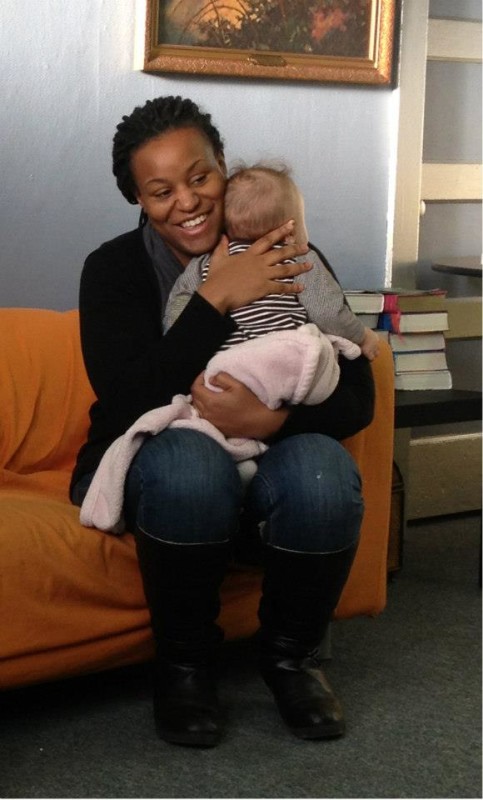 I remember the day my mother took me into her room and told me she was sick. Even though her words didn’t sound daunting, I remember her tone concerned me. She explained in language my seven-year-old brain could understand that for the next few months she would be in the hospital a lot, but everything was going to be OK. My mother was a nurse so the hospital was a safe place for me. But the place that I knew as my mother’s office would turn into a very scary place. Read More
New Jersey is one of only three states implementing family leave insurance programs for workers who need to care for a seriously ill family member or a new child.
Karen S. White
 Ann Vardeman, a soon-to-be mother, spoke about what New Jersey’s family leave insurance program means to her: “It’s a great relief for us to know that we will be able to take the time away from work to bond with our new child, establish a routine, and still be able to pay our bills.” Read more
Activists in New York are hoping to make it the fourth state to pass Paid Family Leave
Donna Dolan
 Melissa was a project manager for a digital marketing agency in New York City when she and her husband had their first child a few years ago. Her husband lost his job seven weeks before her due date. Luckily, after her son was born via caesarean delivery, Melissa was able to draw partial pay for nine weeks through New York State’s temporary disability insurance program. Ours is one of only five states, along with Puerto Rico, to have such a TDI fund in place. Read More
Resistance is growing after North Carolina passes a shocking stream of anti-worker, anti-family policies
Carol Joyner
 The Mass Moral March on Raleigh scheduled for February 8 matters to families. Recent repressive policies in North Carolina not only cut at the fabric of families, undermining their economic security and jeopardizing their health, but also seek to disempower voters who fight on behalf of family-friendly public policies. Read more
Oregon activists say FMLA good first step but it’s time for a leap
Andrea Paluso
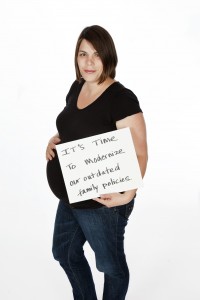 When Janet’s second baby was born she took a seven-week unpaid maternity leave made possible by the now 21-year-old Family and Medical Leave Act (FMLA). Seven weeks. It’s all she could afford. Just the week before she returned to work Janet hemorrhaged due to a retained placenta and lost a third of her blood. She was weak and needed more time at home to recover, but she just couldn’t afford to be away from work any longer. Read more.
In Pennsylvania Marianne finds Facebook conversations with High School friends circle around the important question of paid family leave.
Marianne Bellesorte
 My friends’ question shouldn’t come as a surprise: most of them, like most people in this country, are breadwinners and caregivers. They needed time off in order to give birth or to adopt, and most didn’t have the luxury of taking that time without pay. After all, you can’t tell the bank or the utility company, “Sorry, I won’t be paying this month because I’m having a baby with no paid leave.” Read More
The passage of Temporary Caregiver Insurance means that Rhode Island’s workplace policies more closely reflect the realities of today’s workforce.
Marcia Coné
 Tammy Russo, mother of two, knows what it’s like to try to balance work and family life more than most people. In October 2012, Tammy’s son, Joey, who has severe cognitive disabilities needed to be hospitalized for 17 days. During that time, Joey underwent three major surgeries, two of which were brain surgeries. The financial strain of FMLA leave was substantial, but the coverage was not and Tammy and her family had to figure out how to pay their bills and still make sure her severely disabled son received the care he needed. Read More
In Vermont, stories paint a picture of inhuman choices workers face without paid sick days.
Lindsay DesLauriers
 A volunteer at Women Helping Battered Women begged the legislature to tell her what she should say to the women who ask her for help. Nothing protects them from losing their jobs if they take time to seek legal protection from their abuser. “If I miss work, I’ll lose my job,” they tell her. Read more
In Washington activists and elected officials are working towards common sense policies at both the state and local level that protect families and make fiscal sense.
Marilyn Watkins
 Without access to paid time off, moms are forced to go to work when children are sick, women go back to work a few days following childbirth and working families suffer unnecessary financial and emotional stress when parents fall ill. Paid time off not only relieves individuals suffering but new moms are less likely to go on public assistance or food stamps, and are more likely to be employed – and at higher wages – a year following birth. Read more
Wisconsin, one of the earliest states to win FMLA is now fighting to expand it
Martha De La Rosa
 David Jones, a 12-year-old with Asperger’s Syndrome explains the importance of affordable family leave: “If my mom wouldn’t have taken off of work and stopped giving me those medications, who knows what would have happened to me. I hope that other kids with the same problems as me will continue to have the same opportunity to stay home for a time and get better.” Read more